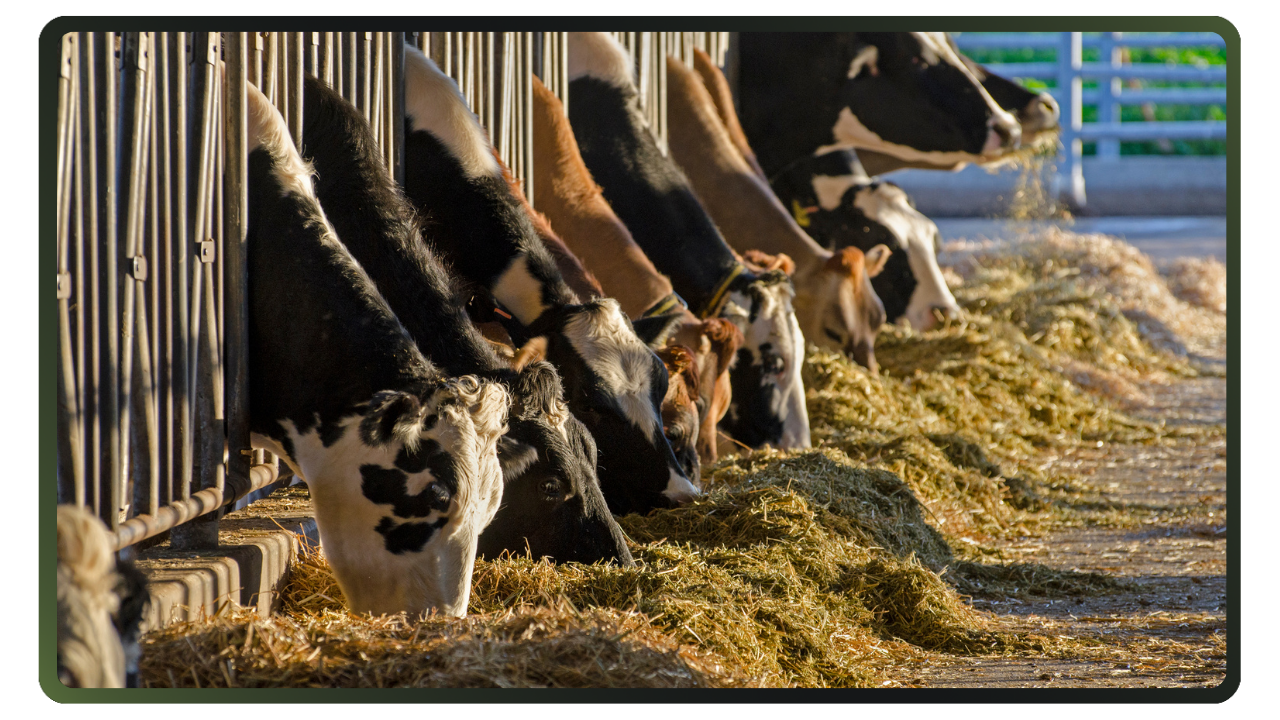
 Farm Challenges
My story doesn’t start in an office. It starts on a fourth-generation dairy farm.
If you look at both sides of my family tree—the Ratesmas from the Netherlands and my mother’s family from the Azores—you’ll find the same roots: immigrants who came to America with nothing but an aspiration to grow. My father arrived at 17, fleeing the milking restrictions of Holland for the freedom of California. He started as a renter and built an operation that, at one point, was the seventh-largest privately owned dairy in the country.
I learned my ABCs on the floor of a milking parlor. By the time I was twelve, I wasn't just feeding calves at 4:00 AM; I was handling the stack of payables while my dad milked cows.
But as I grew up, I noticed a painful disconnect that would eventually change the trajectory of my life.
In the dairy business, you know things are good when your parents are happy. You know things are bad when the bankers show up in suits.
When the industry was thriving, the bankers knew our names. They’d chat with us kids. But when the market shifted, we were sent to the back room and told not to talk. I watched my father—a man who was a pinnacle of the industry, a man other producers came to for advice—suddenly look small and nervous when the bankers arrived.
He was a multi-million-dollar CEO of a massive operation, yet he felt like he was being "barked at" by 25-year-old loan officers who didn't know the difference between a heifer and a steer.
My parents were sick of CPAs talking at them instead of with them. They were running a complex business, yet no one had ever sat them down to explain what a current asset was or what the bank was actually looking for on a balance sheet.
That’s when my dad looked at me and said, "You’re going to be a CPA who can actually talk to people. You’re going to be someone who can help me learn, because that’s what I’m paying for."
I took that to heart. I started accounting classes in the seventh grade. Even after we lost the family farm in 2008, my mission didn't change. I went on to get my Master’s in Accounting and Finance, but I quickly realized that traditional CPA work wasn't the answer. I went into Ag banking because I knew I could be the bridge.
I became the banker who could sit across from a producer and see the weight lift off their shoulders. They realized I wasn't there to judge their numbers; I was there because I had lived their life.
Looking back at my journey from the farm to Ag banking and now to Legacy Farmer, three lessons stand out:
Right now, it is a challenging time for dairy farmers. While there is hope on the horizon, hope isn't a strategy. You must understand your breakeven points. You need the clarity to know exactly how bad things might get and the financial literacy to turn the ship around before it's too late.
You shouldn't feel intimidated by your own numbers, and you certainly shouldn't feel like a stranger in your own bank.

Disclaimer: The information provided in this content is for informational purposes only and does not constitute financial, investment, or legal advice. While we strive for accuracy, the information presented may not reflect the latest market conditions, regulations, or developments. No guarantees are made regarding the completeness or reliability of this content. Before making any financial decisions, always consult a qualified professional. We assume no liability for any actions taken based on the information provided.