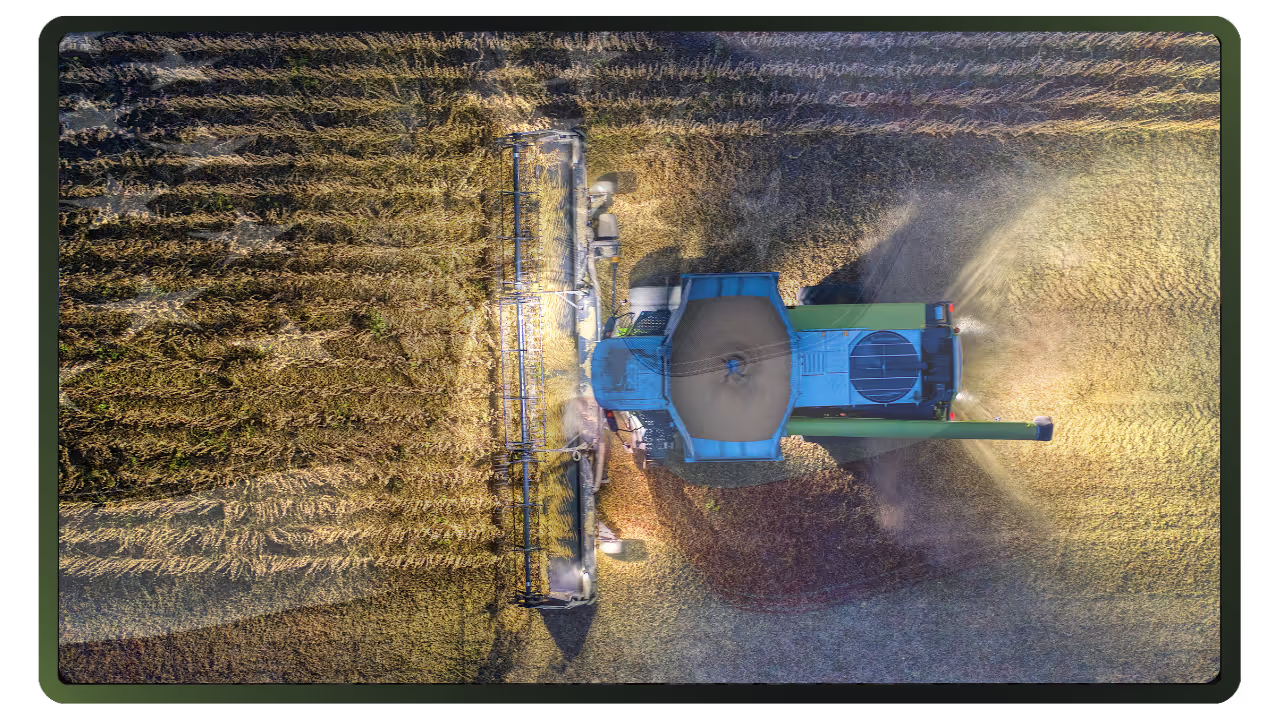
 Farm Challenges
For farmers facing the squeeze of high input costs and volatile markets, relief is finally on the horizon. On December 8, 2025, the USDA announced a massive $12 billion "bridge" package designed to help operations survive the current financial gap until long-term policy changes kick in later in 2026.
Here is the breakdown of the Farmer Bridge Assistance (FBA) Program and the One Big Beautiful Bill Act (OBBBA), and what you need to do immediately to qualify.
Before diving into the dollar amounts, there is a critical deadline you cannot miss. To qualify for the FBA payments, your 2025 acreage reports must be on file and accurate with the FSA by December 19, 2025.
If you haven't certified your acres or need to make corrections, contact your local FSA office today. This report essentially acts as your application.
The core of this announcement is the Farmer Bridge Assistance (FBA) Program, specifically designed to cover modeled losses for the 2025 crop year.
This payment is not a loan; it is a one-time direct payment intended to help you secure financing for the 2026 planting season.
While the FBA provides immediate cash, the One Big Beautiful Bill Act (OBBBA) is the structural fix designed to prevent the need for future ad hoc bailouts.
Starting October 1, 2026, the farm safety net will see historic strength increases:
Beyond direct payments, the administration is attacking the expense side of your ledger:
This package is a "bridge" in the truest sense. The $12 billion FBA payment is the lifeline to get you to the 2026 harvest, at which point the stronger safety nets of the OBBBA will take over to provide long-term stability.
Next Step: Verify your acreage with the FSA before December 19 to ensure you don't miss the February payout.

Disclaimer: The information provided in this content is for informational purposes only and does not constitute financial, investment, or legal advice. While we strive for accuracy, the information presented may not reflect the latest market conditions, regulations, or developments. No guarantees are made regarding the completeness or reliability of this content. Before making any financial decisions, always consult a qualified professional. We assume no liability for any actions taken based on the information provided.