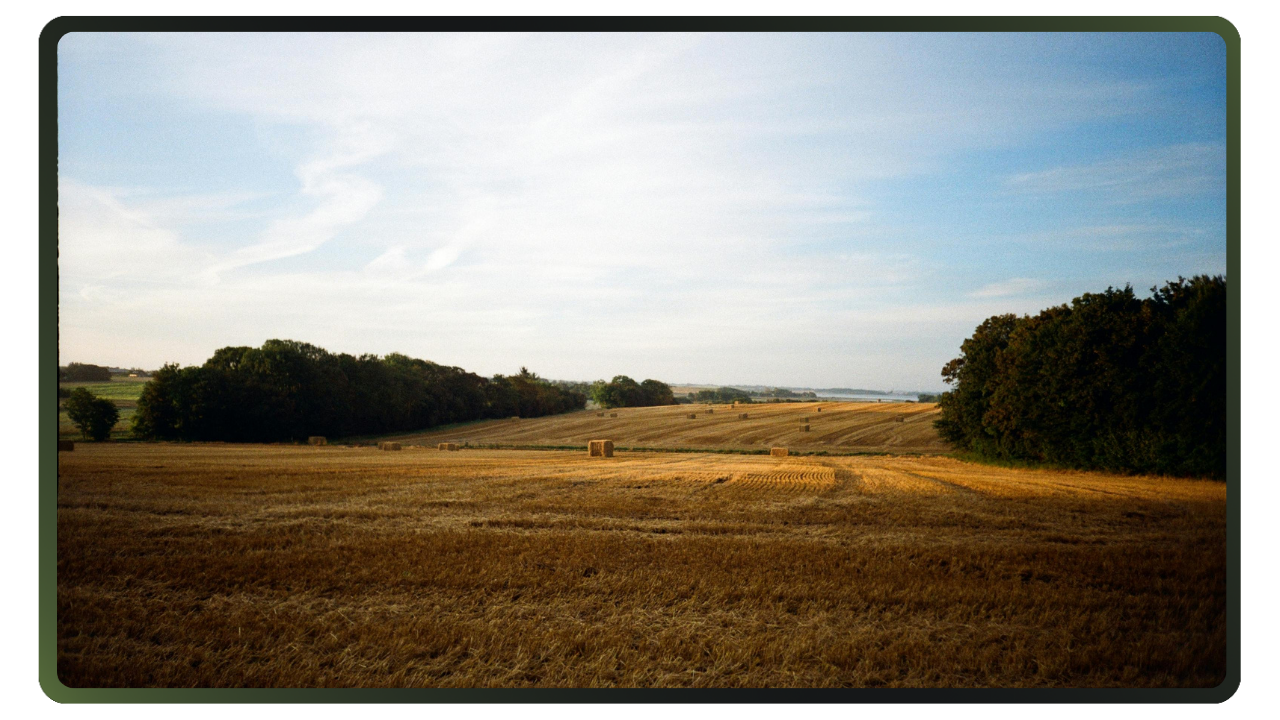
The opportunity you’ve waited a decade for just landed on your kitchen table: the farm next door is officially for sale. In the world of agriculture, we often say you only get the chance to buy the land adjacent to you once in a lifetime.
But is this a legacy-building investment, or a shortcut to financial ruin?
As we move through 2026, the decision to expand requires more than just "gut instinct." It requires a CEO mindset and a cold, hard look at the data.
To make a smart move, you have to understand the ground you’re standing on. According to the USDA National Ag Statistics Service, farmland values have continued their upward trend through the end of 2025.
While we are seeing a stabilization compared to the "frenzy" of the early 2020s, the market isn't showing a widespread decline. In 2026, quality land remains steady. Why? Simple supply and demand. Inventory is scarce, and even with tougher farm economics, the demand for expansion remains consistent.
In short: No. We aren't in a speculative frenzy. Farmland remains a stable, long-term asset. However, while the land will likely appreciate over time, your banker is looking through a much more conservative lens. They are watching declining profitability in key commodities and may predict modest softening in certain pockets.
Before you sign a purchase agreement, you need to move past the emotional "I need that dirt" phase and run the numbers through two specific filters:
If you purchase a property for $1M but add $800k in debt to do it, what happens to your actual net worth? Many producers realize too late that a massive land acquisition actually weakened their overall financial position. You must analyze your starting position and ensure you aren't over-leveraging the equity you've spent years building.
Can the land pay for itself? With high land prices and fluctuating commodity values, the "short-term ROI" is harder to find. You must look at the productivity of that specific soil and ask: With current input costs, can this property generate the earnings to support the investment?
The number one result of doing your due diligence isn't just a "yes" or "no" answer—it’s confidence.
At Legacy Farmer, we use specialized software to run Pro Forma scenarios. We take your existing numbers and layer the new purchase on top as a projected enterprise. This shows you the exact impact on your cash flow and balance sheet before you ever take a meeting with your lender.
When you walk into the bank, you shouldn't be asking them what's possible. You should be telling them:
"Here is the investment I'm making, here is the due diligence I’ve already done, and here is how it strengthens my operation."
This shows the lender that you aren't just paying the "price of admission" for a loan—you are a professional running a business.
The farm next door is a rare opportunity, but "adjacent" doesn't always mean "affordable." Don't let a neighbor's retirement become your financial burden. Get the pencil out, run the scenarios, and ensure your legacy is built on a foundation of profit, not just acreage.

Disclaimer: The information provided in this content is for informational purposes only and does not constitute financial, investment, or legal advice. While we strive for accuracy, the information presented may not reflect the latest market conditions, regulations, or developments. No guarantees are made regarding the completeness or reliability of this content. Before making any financial decisions, always consult a qualified professional. We assume no liability for any actions taken based on the information provided.